Why Your Grip Pressure Rises on the Back Nine
Quick Answer: Grip pressure rises late in a round for three reasons: forearm fatigue makes you squeeze to maintain control, scoring pressure raises baseline muscle tension, and a damp or worn glove reduces friction so you compensate by gripping harder. The result is reduced wrist hinge, less clubhead speed, and a swing that feels short. The fix is a mid-round reset routine, not a swing change.
The pattern is remarkably consistent: through nine holes the swing feels free, and somewhere around the twelfth it starts to feel like you are steering rather than swinging.

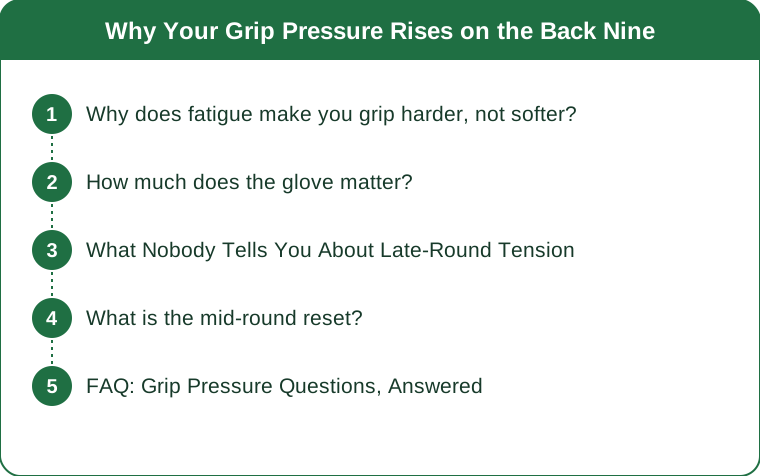
Why does fatigue make you grip harder, not softer?
Because the muscles that control the club lose endurance before they lose strength, and the body compensates with tension.
Forearm flexors fatigue over a round. Two hundred practice waggles, seventy full swings, and a couple of hours of holding a club adds up. As those muscles tire, maintaining the same secure connection to the grip requires proportionally more effort - which you experience as squeezing.
Reduced sensitivity accompanies fatigue. Tired hands report less accurate feedback about how firmly they are holding something, so the calibration you had at the first tee is no longer reliable at the fourteenth.
Grip pressure kills wrist hinge. A tight grip stiffens the wrists, and wrist hinge is a major contributor to clubhead speed. This is why late-round shots often go shorter without feeling worse - the speed is gone before the strike quality is.
Tension travels up the chain. Tight hands lead to tight forearms, then tight shoulders, then a shorter turn. By the time it reaches the shoulders it looks like a swing problem, and people start trying to fix the swing.
And it accelerates once it starts. Shorter shots produce worse positions, which produce more pressure, which produces shorter shots.
How much does the glove matter?
More than most players account for, and it changes measurably across a round.
Leather absorbs sweat and loses grip. A glove that was tacky on the first tee is noticeably slicker by the tenth, especially in late summer heat. Reduced friction means you must grip harder for the same security.
Most players carry one glove and use it all round. Rotating two gloves - swapping at the turn and letting the first dry - keeps friction high through eighteen holes and costs nothing but a second glove.
Grips wear out and nobody notices. Rubber grips harden and glaze over time. A set of grips more than a year or two old, or that have gone shiny, requires substantially more hand pressure to control.
Humidity changes everything. Late summer humidity is the worst case: damp hands, damp glove, damp grips. This is the season where grip pressure problems are at their most obvious.
Simple test: if a fresh glove or a newly cleaned grip immediately makes the club feel more secure, friction was your problem - not strength and not technique. Grips can be cleaned with warm water and a brush, and it restores a surprising amount of tack.

What Nobody Tells You About Late-Round Tension
Score pressure raises baseline tension before you notice it. If the round is going well, protecting it creates tension; if it is going badly, frustration creates tension. Both arrive around the turn, and both show up in the hands first.
Waiting increases it. Slow play means standing over the ball longer, more time to think, and more static tension. A group that takes five hours produces more grip pressure than one that takes four, independent of anything you do.
Dehydration contributes directly. Reduced fluid affects muscular endurance and fine motor control. Late summer rounds without adequate drinking produce measurably worse late holes, and most players under-drink because they only notice thirst after performance has already dropped.
The pressure is usually in the last three fingers. A functional grip is firm in the last three fingers of the lead hand and light elsewhere. Late-round tension typically spreads into the trail hand and the thumbs, which is what kills wrist mobility.
Your practice swing tells you the truth. If your practice swing is noticeably freer than your actual swing by the fifteenth hole, that gap is tension, not technique.
And gripping down helps. Choking down slightly on the club shortens the lever, which lets you swing with less effort and less grip pressure while giving up very little distance - a good trade on the closing holes.
What is the mid-round reset?
Four things, all doable between shots, that take under a minute total.
Rate your grip pressure on a scale of 1 to 10 before each swing. Aim for around 4 or 5 - firm enough to control, light enough to hinge. Naming the number is what makes it adjustable; without the check, tension creeps back within two holes.
Shake the hands out and stretch the forearms at the turn. Thirty seconds of wrist flexion and extension stretches plus a shake-out resets a lot of accumulated tension. Do it again around the fifteenth.
Change the glove at the turn. Or at minimum, take it off between shots so it dries. This is the easiest single intervention.
Drink on a schedule, not on thirst. Roughly every three holes in warm weather. Dehydration is the contributor that quietly affects everything else.
And take one deep breath before the swing. A slow exhale reduces sympathetic tone measurably and lowers baseline muscle tension. It sounds trivial; it is one of the few interventions that works instantly.
If the swing still feels short, grip down half an inch and accept a slightly shorter club. It restores the free feeling faster than trying to swing harder does.
FAQ: Grip Pressure Questions, Answered
How tight should a golf grip actually be?
A common description is firm enough to control the club and no firmer - often described as holding a tube of toothpaste without squeezing any out. On a 1 to 10 scale, most instruction points to about 4 or 5.
Does grip pressure affect distance?
Yes, mainly by restricting wrist hinge and reducing clubhead speed through impact. Excessive pressure also tends to slow the release, which loses speed at exactly the wrong moment.
Should I use two gloves?
Most players use one on the lead hand, and rotating two gloves through a round is a common practice in humid conditions. Some players in very wet weather use a pair of rain gloves, which grip better when wet than dry gloves do.
When should grips be replaced?
A common guideline is every 40 rounds or once a year, whichever comes first, and sooner in humid climates or with frequent range use. If they look shiny or feel hard, they are past it.
TL;DR:
- Grip pressure rises late because forearms fatigue, and tired hands compensate with tension rather than relaxing.
- Tight hands kill wrist hinge, which costs clubhead speed before it costs strike quality.
- A damp glove and worn grips reduce friction - rotate two gloves and clean your grips.
- Reset with a 1-to-10 pressure check, forearm shake-out at the turn, scheduled drinking, and one deep breath before the swing.
The part worth remembering is that this is not a swing fault and it does not need a lesson. Almost everything that goes wrong on the back nine traces to hands that got tired and a glove that got wet, and both have equipment-and-routine answers that work the same afternoon you try them.
See It in Motion
Seen here: UPF 50+ Adjustable A-Line Running Skort with Pockets — shop it on bubblelime.com
Keep Reading
This article is for general informational and styling purposes only. Fit, sizing, and product availability may vary.