Why a Golf Swing That Feels Great on the Range Falls Apart the Moment You're on the Course
Quick Answer: The range removes nearly every variable a real course introduces — no out-of-bounds consequence, a flat, repeated lie, and no score pressure — so a swing grooved entirely on the range hasn’t actually been tested against the variable lies, situational pressure, and one-shot-per-hole reality of an actual round, and that gap is what causes the breakdown.
The swing mechanics themselves usually haven’t actually changed between the range and the course — what’s changed is everything around the swing that the range never trained for.

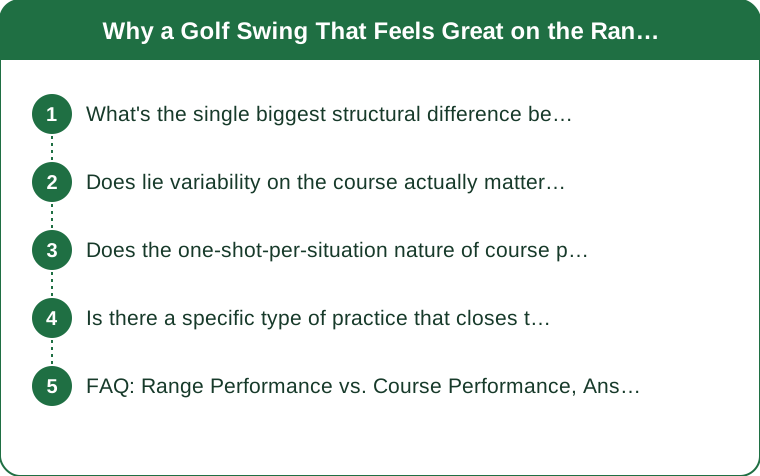
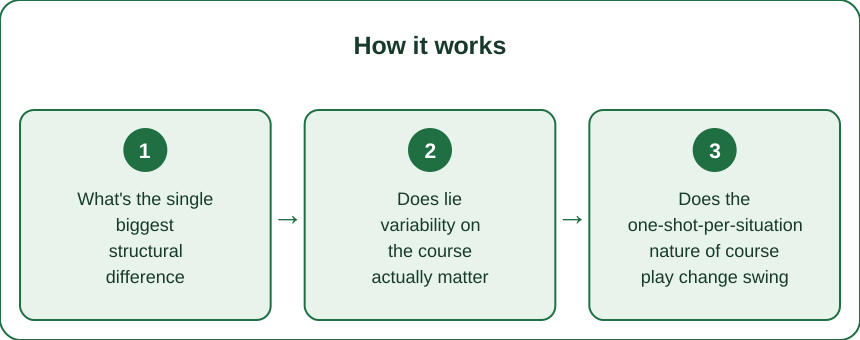
What’s the single biggest structural difference between range and course conditions?
Repetition versus consequence. On the range, a bad shot costs nothing and is immediately followed by another attempt from the same flat lie; on the course, each shot has a real consequence and there’s no immediate do-over, which introduces a psychological pressure the range simply doesn’t replicate no matter how many balls you hit.
Does lie variability on the course actually matter as much as it seems?
Yes, significantly — range mats or perfectly flat range grass don’t replicate uneven lies, rough, or sloped terrain, all of which require real-time swing adjustments that a range-only practice routine never trains, meaning a swing that’s mechanically sound on a flat lie can genuinely struggle with an unfamiliar lie it’s simply never practiced from.

Does the one-shot-per-situation nature of course play change swing execution?
Yes — on the range, a golfer can immediately correct and re-attempt after a mishit, building in real-time feedback within the same setup; on the course, that shot is final, and the added mental weight of a single, non-repeatable attempt measurably affects swing execution for many golfers, independent of the swing mechanics themselves being any different.
Is there a specific type of practice that closes this gap better than standard range time?
On-course practice rounds, or range practice that deliberately simulates single-attempt, varied-lie conditions (hitting one ball per station from different lies rather than a full bucket from one spot) more directly train the specific skills a real round requires, compared to standard repetitive range sessions from one flat spot.
FAQ: Range Performance vs. Course Performance, Answered
Does playing more rounds actually close this gap over time?
Yes, generally — the pressure and variability of course play is itself a skill that improves with repeated exposure, meaning consistent on-course play, not just more range time, is what specifically narrows this gap.
Is it worth simulating course pressure during range sessions?
Some golfers find deliberately practicing a single committed shot per station, rather than repeated attempts from the same spot, helps build some of the course-specific mental skill that repetitive range practice doesn’t train.
Does course management (shot selection) matter as much as swing mechanics for this gap?
Often yes — some of what feels like a swing breaking down on the course is actually a shot selection or strategy issue rather than a pure mechanics problem, and the two can be easy to conflate when a round goes poorly.
TL;DR:
- The range removes consequence, lie variability, and single-attempt pressure that the course adds
- Uneven and unfamiliar lies require real-time adjustments the range rarely trains for
- The one-shot, no-redo nature of course play adds real mental weight range repetition doesn’t
- On-course practice or varied-lie single-attempt range drills close the gap better than standard buckets
The swing wasn’t actually worse on the course — it was tested against conditions the range never included.
See It in Motion
Seen here: UPF 50+ Pleated Running Skort with 26” Leggings & Pockets — shop similar styles on bubblelime.com
Keep Reading
This article is for general informational and styling purposes only. Fit, sizing, and product availability may vary.