Why Your Numbers Change the Week the Fairways Turn Soft
Quick Answer: Soft fairways remove roll-out, so total distance drops sharply even when your carry is unchanged - commonly 15 to 25 yards off the tee. A wetter lie also reduces backspin on iron shots because moisture gets between the clubface and the ball, producing flyers from the rough and lower-spinning, longer-running approach shots. Club up on approach shots, expect less roll everywhere, and stop judging your swing by numbers that were measured in July.
Your drives were finishing at the 150 marker all summer. In October they are twenty yards short of it, off what felt like the same swing.
The swing is probably fine. The ground stopped helping.

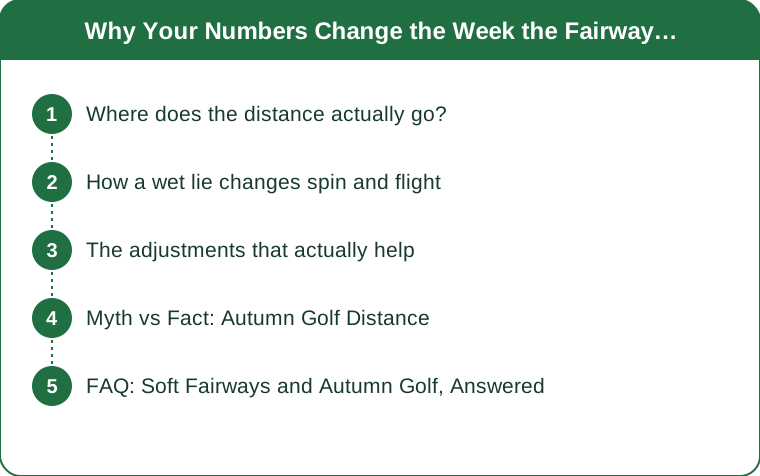
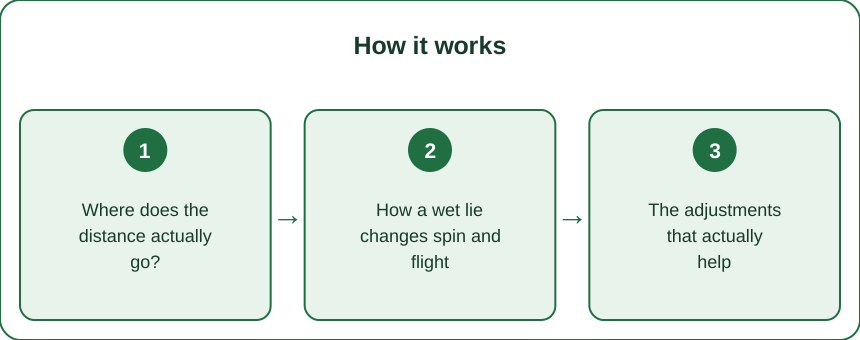
Where does the distance actually go?
Roll-out is the first and largest loss. On firm summer fairways a drive can gain a substantial amount of run; on soft autumn turf that number approaches zero.
This is why total distance drops far more than carry distance does. Your carry may be almost identical while your total is 20 yards shorter, which feels like losing swing speed and is not.
Colder air is the second factor and it is genuinely additive. Denser air increases drag, and the ball itself is less resilient when cold, both of which reduce carry.
A cold ball is a real and underrated effect. A ball that has been in a bag in a cold boot performs measurably worse than a warm one, and rotating two balls between pocket and play is a legitimate, rules-permitted approach.
Softer ground also affects your footing, which reduces how aggressively you can use the ground - a smaller effect but a consistent one across a round.
And you are wearing more clothing. A couple of layers restricts rotation slightly, and most players lose a little clubhead speed in autumn purely from what they are wearing.
How a wet lie changes spin and flight
Moisture between the clubface and the ball reduces friction, which reduces backspin. Less backspin means a lower flight and more roll on landing when the ground allows it.
This is the flyer lie effect, and it is most dramatic from wet rough. Grass and water get trapped at impact, spin drops sharply, and the ball can travel considerably further than intended - which is why the wet-rough approach that flies the green is so common in autumn.
From a wet fairway the effect is smaller but still present, producing slightly lower, longer shots that check less on the green.
Greens are usually softer at the same time, which partly compensates by holding shots that would otherwise release. The net effect varies by course and is worth observing on the first few holes.
Dry the face and the grooves between shots. Grooves full of water and grass are exactly what causes the friction loss, and a towel is the cheapest performance equipment you own.
Expect less predictability rather than a fixed adjustment. The honest read is that wet lies increase variance, so playing to the middle of greens is worth more in autumn than it is in July.

The adjustments that actually help
Club up on approach shots and swing at the same speed. Trying to hit a shorter club harder in cold, soft conditions is the most common autumn error and produces worse contact and more variance.
Recalculate the distances that matter to you. Layup targets, carry-the-bunker decisions, and driver-versus-three-wood choices were all calibrated in summer conditions and are wrong now.
Stop expecting run-outs on approach. Landing a ball short to release onto the green works in July and simply plugs in October. Fly it to the target.
Take more club and less swing on into-the-wind shots, which combine badly with cold, dense air. A smooth longer club beats a hard shorter one every time in these conditions.
Warm up longer than in summer. Cold muscles produce less rotation and slower clubhead speed, and the first three holes are where most autumn rounds get away from people.
Change to a softer-feeling ball if you play in the cold regularly, and keep a spare warm one in a pocket to rotate.
And clean the ball and clubface at every opportunity. Mud on a ball affects flight far more than most players credit, and autumn is when it happens on every hole.
Myth vs Fact: Autumn Golf Distance
Myth: You have lost swing speed over the summer. Fact: total distance falls mostly because roll-out disappears. Carry distance is usually much closer to your summer numbers than the finishing position suggests.
Myth: Cold weather only affects the ball. Fact: it affects the ball, the air density, your muscles, and your clothing. All four reduce distance, and they compound.
Myth: Wet rough is always harder. Fact: it is more unpredictable rather than uniformly harder. A wet flyer lie can send the ball further than intended, which is why the miss is so often long.
Myth: Softer greens mean you can be less precise. Fact: softer greens hold better but wet approach shots also spin less, so the two partly cancel. Aim for the middle rather than assuming a shot will stop.
Myth: Hitting harder compensates for the conditions. Fact: swinging harder in cold conditions reduces contact quality, and poor contact costs more distance than the conditions do. Club up and swing normally.
Myth: Keeping a ball in your pocket is a gimmick. Fact: ball temperature has a real, measurable effect on performance, and rotating a warm ball into play is both effective and permitted.
FAQ: Soft Fairways and Autumn Golf, Answered
Why am I hitting it so much shorter in autumn?
Mostly lost roll-out - soft fairways remove the run that firm summer turf provided, which commonly costs 15 to 25 yards of total distance off the tee even when carry is unchanged. Colder, denser air and a colder ball add to it.
Does a cold ball really matter?
Yes, measurably. A ball kept warm performs better than one that has sat in a cold bag. Rotating two balls between a pocket and play is effective and within the rules.
Why do my shots from wet rough fly too far?
Moisture between the face and ball reduces friction and therefore backspin, producing a lower, longer flyer. It is the classic autumn miss and it is why the ball ends up over the green.
Should I club up or swing harder?
Club up and swing at your normal speed. Swinging harder in cold conditions degrades contact quality, which costs more distance than the conditions themselves.
Do soft greens mean I can land it short and release?
No - that works on firm summer turf and plugs in autumn. Fly the ball to your target, and aim for the middle of greens because wet lies increase variance.
TL;DR:
- Total distance drops mainly because roll-out disappears on soft fairways, not because you lost swing speed - carry is usually close to summer numbers.
- Cold dense air, a cold ball, extra layers, and softer footing all add smaller losses on top.
- Wet lies reduce friction and backspin, producing flyers from wet rough and lower, longer approach shots.
- Club up and swing normally; hitting harder in the cold costs more through poor contact than it gains.
- Fly the ball to the target rather than landing short to release, keep a warm ball in your pocket, and dry the grooves every shot.
Recalculate your yardages in October. The ones in your head were measured in a different game.
See It in Motion
Seen here: UPF 50+ Pleated Running Skort with 26” Leggings & Pockets — shop similar styles on bubblelime.com
Keep Reading
This article is for general informational and styling purposes only. Fit, sizing, and product availability may vary.