Walking 18 Holes: How Much Exercise Is Golf, Really?
Quick Answer: Walking 18 holes covers roughly four to six miles and 10,000 to 13,000 steps, takes four-plus hours on your feet, and burns in the neighborhood of 1,200 to 1,500 calories - double or more what a cart round costs. Physiologically it is a long, hilly, low-intensity session: exactly the easy aerobic volume most training lives lack. A push cart preserves nearly all of the exercise while saving your back and your swing; riding keeps maybe a third of it.
Golf has spent decades apologizing for itself as exercise, mostly because the cart version set the reputation. The walked version is a different sport for your body - and the numbers make the case better than any argument.

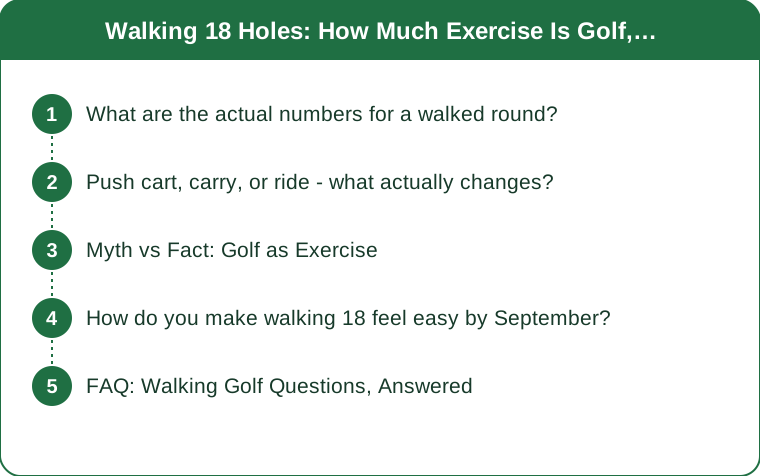
What are the actual numbers for a walked round?
Bigger than the scorecard suggests.
Distance: four to six miles. A course measures 6,000 to 6,500 yards tee-to-green - about three and a half miles as the crow flies - but nobody plays as the crow. Walking between tees, tracking down offline shots, pacing greens, and detouring around hazards reliably pushes GPS-measured rounds to four miles minimum, and five-plus on spread-out courses.
Steps: 10,000 to 13,000. The daily step target most people chase all week, completed in a single morning, with a scorecard to show for it.
Time on feet: four to five hours. This is the underrated metric. Standing, walking, and swinging for four continuous hours is a genuine endurance demand - ask anyone’s feet after their first walked round of the season.
Calories: roughly 1,200 to 1,500 for most women walking with a push cart - individual numbers swing with body size, terrain, and pace, but studies of walked golf consistently land in this range. Riding a cart cuts it roughly in half, mostly by deleting the miles.
Heart rate: mostly easy, usefully spiky. A walked round lives in the light-to-moderate aerobic zone, with brief climbs on hills and long uphill par fives. It is the definition of low-intensity steady-state volume - the unglamorous base-building work that supports everything else.
And the terrain multiplies quietly. A hilly course adds elevation gain that flat-city step counts never see. Regulars at hilly courses carry noticeably better hill legs than their step totals would predict.
Push cart, carry, or ride - what actually changes?
The transport decision is the exercise decision.
Carrying is the most work and the worst trade. A loaded stand bag runs 20-plus pounds, and hauling it five miles adds real load - but asymmetrically, on one shoulder at a time, with documented late-round fatigue that shows up in swing mechanics and lower-back tightness. The extra calorie burn over pushing is modest; the cost lands on your back and your back nine.
The push cart is the quiet optimum. Research on walked golf finds pushing burns essentially the same as carrying - the engine is still your legs moving five miles, now with better posture and a spared spine. Scores tend to hold or improve versus carrying because fatigue arrives later. If the goal is exercise plus performance, the push cart wins on both axes and it is not close.
Riding keeps the swings and loses the sport’s cardio. A cart round still involves 3,000 to 4,000 steps and a hundred-ish athletic rotational movements, which beats the couch decisively - but the four-mile walk, the elevation, and the time-on-feet endurance all vanish with the miles.
The hybrid exists and nobody talks about it. Sharing a cart but walking to your own ball, or riding the brutal transfers and walking the holes, recovers a surprising fraction of the steps on hot August days when a full walk is unwise.
Heat honesty for late summer: on genuinely hot afternoons, the cart is not weakness, it is heat management. The walking season’s best windows right now are early morning and twilight rounds - cooler, cheaper, faster, and the light is better anyway.

Myth vs Fact: Golf as Exercise
Myth: Golf does not count as real cardio. Fact: A walked round is four-plus miles of hilly, loaded walking - textbook low-intensity aerobic volume, the zone most recreational athletes chronically under-fill. It will not replace intervals; it fills the base that intervals sit on. Watch, ring, or app, a walked 18 registers as one of the biggest activity days on your week.
Myth: If you ride, there is no point. Fact: A cart round still delivers a few thousand steps, dozens of full-body rotational efforts, and hours outdoors. Diminished is not deleted - though calling a cart round a workout is generous. Call it activity, and take the walk when conditions allow.
Myth: The swing itself is a workout. Fact: Ninety-ish swings including practice motions is athletic movement, not training load. The swing is why golf needs supporting strength and mobility work; the walk is where the exercise lives. The two claims get swapped constantly.
Myth: Nine holes is not worth walking. Fact: Half the numbers still land - two-plus miles, 5,000-plus steps, an hour and change on your feet. A walked nine after work beats most days’ entire movement total, and twilight rates make it the best-value workout in town.
Myth: You need cardio fitness before you can walk a course. Fact: The course itself builds it. Start with nine, take the push cart, and the round meets you where you are - it is self-paced by design, with a built-in rest every time you address the ball.
How do you make walking 18 feel easy by September?
A little supporting structure turns the walk from ordeal to default.
Build the base between rounds. The weekday habit that transfers best is simply walking - three brisk 30-to-40-minute walks a week make the five-mile round feel routine within a month. Hills on purpose if your course has them.
Manage August like an athlete. Morning or twilight tee times, a water plan (a bottle per nine, minimum, more in humidity), electrolytes on the truly hot days, and the sun trifecta - hat, sunscreen reapplied at the turn, UV sleeves if you burn. Heat is the only serious argument against walking right now, and scheduling defeats it.
Dress for the miles, not just the clubhouse. Modern golf apparel finally admits it is athletic wear: stretch-waist skorts and pants that move like yoga pants, sweat-wicking polos, and cushioned athletic socks. The women’s-golf uniform quietly converged with what you would wear to actually exercise - because walking five miles is actually exercise. Two pairs of shoes in rotation, both spikeless-comfortable, both broken in.
Fuel the round like the four-hour event it is. A real breakfast, then something at the turn with protein in it - the back-nine fade that gets blamed on concentration is usually blood sugar wearing a golf glove.
Give the body its bookends. Five minutes of hip and shoulder mobility before the first tee - the first swing should not be the warm-up - and a minute of hip flexor and calf stretching after. The post-round stiffness that walkers complain about mostly belongs to the missing bookends, not the miles.
And track one number for motivation: total steps per round. Watching a season of five-figure days accumulate reframes the entire sport - the scorecard measures the golf, the step count measures what the golf did for you.
FAQ: Walking Golf Questions, Answered
How many miles is walking 18 holes?
Four to six miles for most players on most courses - the scorecard distance is about three and a half, and real routes between shots, tees, and greens add the rest. GPS watches regularly surprise first-time walkers with the total. Count on 10,000 to 13,000 steps.
How many calories does a walked round burn?
Roughly 1,200 to 1,500 for most women walking 18 with a push cart, varying with body size, terrain, and heat. Riding a cart cuts the total to approximately half, since the miles - not the swings - are the main engine of the burn.
Is walking golf enough exercise on its own?
As aerobic base volume, a walked round or two per week is a genuinely strong foundation - hours of hilly, low-intensity work. What it does not provide is strength training or higher-intensity cardio, so the complete picture pairs the walking with two short strength sessions a week. Golf fills the volume slot beautifully.
Is a push cart or carrying better exercise?
The calorie difference is smaller than intuition says - the five miles of walking dominates either way. Carrying adds asymmetric shoulder load, documented late-round fatigue, and back complaints; pushing keeps virtually all the exercise with none of those costs. For fitness plus performance, the push cart is the answer.
TL;DR:
- Walking 18 = four to six miles, 10,000 to 13,000 steps, four-plus hours on your feet.
- Expect roughly 1,200 to 1,500 calories with a push cart - about double a cart round.
- Push cart beats carrying: same burn, spared back, better back nine. Riding keeps about a third of the activity.
- It is classic zone-1-to-2 base volume - the easy aerobic work most training weeks lack.
- In August: morning or twilight rounds, a bottle per nine, and stretch-waist gear built for five miles.
Golf was never a poor excuse for exercise. Riding was - and the difference between the two is parked next to the cart barn.
See It in Motion
Seen here: UPF 50+ Pleated Running Skort with 26” Leggings & Pockets — shop similar styles on bubblelime.com
Keep Reading
This article is for general informational and styling purposes only. Fit, sizing, and product availability may vary.