How to Dress for a Round That Starts Cold and Finishes Warm
Quick Answer: Build three thin layers rather than two thick ones - a moisture-moving base, a light insulating mid layer, and a wind-blocking outer - and choose each for how easily it comes off mid-round. Autumn rounds commonly span 10°C or more from first tee to final green, and the real constraint is not warmth but swing freedom: anything that restricts shoulder rotation costs distance, so layers must be thin, stretchy, and easy to remove without stopping play.
You are cold on the first tee, comfortable by the fourth, and carrying a jumper for the last fourteen holes. Meanwhile your first three drives were short, and you assumed that was rust rather than the fact that you were swinging inside a jacket you could not rotate in.

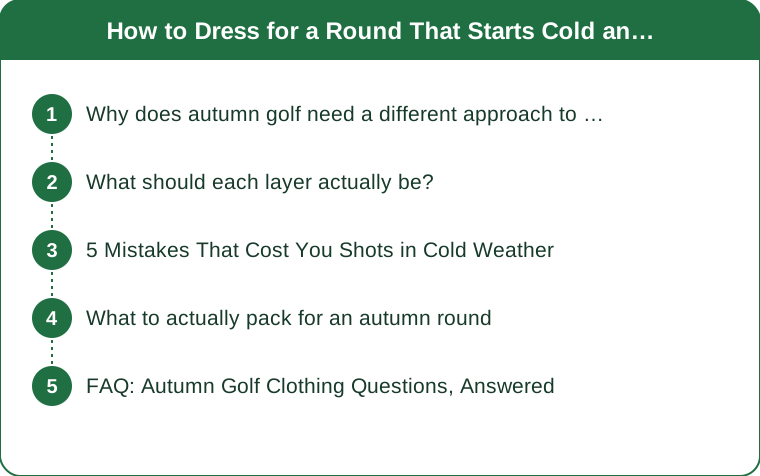
Why does autumn golf need a different approach to layering?
Because of the size of the temperature swing and the specific movement requirement.
The swing across a round is larger in autumn than in any other season. An early October tee time can start near dawn temperatures and finish in mid-afternoon sun, and the difference between those is commonly 10°C or more. A summer round might vary by three or four degrees, which one outfit handles comfortably.
The golf swing demands a lot of rotation, and clothing restricts it easily. Shoulder turn and thoracic rotation are directly limited by anything tight across the back and upper arms. A bulky jumper is not just warm - it measurably restricts the movement the swing depends on, which is why so many people play badly in the opening holes of a cold round.
You also generate very uneven heat. Walking between shots raises body temperature meaningfully; standing over a putt does not. Golf alternates between activity and stillness for four hours, which is precisely the condition layering exists for.
Cold hands are a specific and underrated performance issue. Grip pressure and feel deteriorate when hands are cold, and touch around the greens goes first. Warm hands are worth more strokes than warm anything else.
And autumn brings dew and wet ground in the morning. Wet feet in the first three holes make the whole round uncomfortable regardless of how well the rest of the outfit works.
The design goal, therefore: stay warm at rest, unrestricted in the swing, and able to shed a layer between shots without breaking rhythm. That is a different problem from simply staying warm.
What should each layer actually be?
Three thin layers, each with a defined job.
Base layer: moving moisture, not adding warmth. A thin technical or merino long-sleeve worn next to skin. Its job is to move sweat away so you do not get chilled when you stop walking. Cotton is the wrong choice here specifically because it holds moisture against skin and stays cold once damp.
Mid layer: the thermal one, and the one you will remove. A thin fleece, a lightweight quarter-zip, or a technical knit. A quarter-zip is worth choosing deliberately, because it gives you a temperature control that does not require stopping - opening the zip a few inches dumps a surprising amount of heat.
Outer layer: wind, not bulk. Wind is what makes an autumn round feel far colder than the thermometer says, and a very light windproof gilet or jacket blocks it at almost no weight. A gilet in particular keeps the core warm while leaving the arms completely free, which is why so many golfers converge on it.
Everything must stretch. Anything without meaningful stretch across the back and shoulders restricts rotation. This single criterion eliminates most non-golf outerwear from consideration, whatever its warmth rating.
Layers must be removable without a full stop. A gilet over a quarter-zip can be shed in fifteen seconds. A jumper under a jacket cannot, and you will keep it on and overheat instead.
Hands, and this deserves its own line. A pair of thin thermal mitts worn between shots and removed to swing beats thick gloves worn continuously - grip feel matters more than constant coverage. A hand warmer in the pocket is small, cheap, and disproportionately effective on a cold morning.
Feet: waterproof shoes and one good pair of socks. Morning dew soaks non-waterproof shoes within a few holes. A single technical sock outperforms two cotton pairs, which compress and reduce circulation, making feet colder rather than warmer.
And a hat. Meaningful heat is lost from an uncovered head in cold wind, and a thin beanie that fits under nothing and interferes with nothing is the cheapest warmth available.

5 Mistakes That Cost You Shots in Cold Weather
1. Swinging in a restrictive top for the first three holes. This is the big one. Bulky or non-stretch layers limit shoulder turn, which shortens the backswing and costs distance, and most people attribute the resulting bad start to being rusty. Warm up in the layer, and if you cannot rotate freely, take it off before the first tee rather than after the third.
2. Skipping the warm-up because it is cold. Cold muscles are less compliant, and going straight from a car to a full-speed driver swing is both a performance and an injury problem. Five minutes of arm swings, trunk rotations, and half-speed shots matters more in October than in July, not less.
3. Wearing one thick layer instead of three thin ones. A thick jumper has one setting. Three thin layers have several, and the round has several temperatures. This is the whole argument for layering and it is routinely ignored.
4. Forgetting that the ball travels differently. Colder air is denser and a colder ball is less lively, so shots carry less in autumn conditions. Expect to club up, sometimes by more than one club as it gets genuinely cold, and stop diagnosing a swing problem that is actually physics. Keeping a spare ball in a pocket to rotate keeps at least one at body temperature.
5. Cold hands, ignored until the greens. Grip pressure rises unconsciously when hands are cold, and rising grip pressure ruins touch. By the time you notice, you have three-putted twice. Mitts between shots, a hand warmer in the pocket, and hands in pockets while walking are cheap insurance.
And the bonus: not planning where the layers go. A jumper removed at the fourth hole has to live somewhere. A cart is easy; carrying is not, so choose layers that pack down small enough to fit in the bag, or you will carry them in your hand for two hours.
What to actually pack for an autumn round
A checklist that fits in one bag pocket.
Worn at the start: technical base layer, quarter-zip mid layer, light windproof gilet, waterproof shoes, one pair of technical socks, thin beanie, glove.
In the bag: thin waterproof jacket in case the forecast is wrong, thermal mitts, one hand warmer, a spare glove, a small towel, and a spare ball kept in a pocket rather than the bag.
Why a spare glove. A damp glove from morning dew loses grip badly, and swapping to a dry one at the turn is a genuine improvement rather than a fussy detail. Store the damp one somewhere it can dry rather than crumpled in a pocket.
Why the small towel. Wet grips in dewy morning conditions are the most common cause of a club moving in the hands, and grips pick up moisture from wet grass on every shot.
A note on rain in autumn. Autumn showers arrive faster than summer ones and the ground stays wet longer. A packable waterproof weighing almost nothing is worth the space every single round from September onward.
Timing your tee time deliberately. A mid-morning start rather than first light substantially reduces the temperature range you have to dress for, and the course will have dried. If the choice is yours, it is the easiest fix available.
And plan a mid-round adjustment point. The turn is the natural moment - a minute at the ninth to remove a layer, swap a glove, and warm your hands properly is worth more than trying to manage it hole by hole.
One last consideration for autumn specifically: low sun. An early or late autumn round puts the sun much lower in the sky than summer, which makes following a ball genuinely hard on some holes. A cap with a brim is a visibility item, not just a warmth one.
FAQ: Autumn Golf Clothing Questions, Answered
What should I wear for a cold morning round of golf?
Three thin layers: a moisture-moving technical or merino base, a light insulating quarter-zip, and a windproof gilet or light jacket. Add waterproof shoes for the dew, a thin beanie, and thermal mitts to wear between shots. Every layer should stretch enough not to restrict shoulder rotation.
Does cold weather affect how far the ball goes?
Yes, in two ways. Colder air is denser, which increases drag, and a cold ball is less resilient so it comes off the face slower. Expect meaningfully shorter carry as temperatures drop and club up accordingly. Keeping a spare ball in a trouser pocket so at least one stays near body temperature is a common trick.
Should I wear gloves on both hands in cold weather?
Many golfers prefer thermal mitts worn between shots and removed to swing, which keeps hands warm without sacrificing grip feel. Winter gloves worn on both hands throughout are an alternative, though some players find the loss of feel costs more than the warmth gains around the greens.
How do I stop a jumper restricting my swing?
Choose stretch fabrics and thin layers rather than one bulky one, and test rotation before the first tee rather than discovering it on it. A gilet is the standard solution because it warms the core while leaving the arms and shoulders completely free.
What is the best way to handle the temperature change during a round?
Plan a single adjustment point at the turn and use a quarter-zip you can open on the move for finer control. Choose layers that pack down small enough to go in the bag, because a removed jumper you have to carry for fourteen holes is a worse outcome than the one you were trying to avoid.
TL;DR:
- Three thin stretch layers beat one thick one - autumn rounds span 10°C or more from tee to finish.
- Restriction costs distance: if you cannot rotate freely, the layer is wrong regardless of warmth.
- A quarter-zip lets you dump heat without stopping; a gilet warms the core and frees the arms.
- Cold hands ruin touch first - mitts between shots and a hand warmer are cheap strokes.
- Colder, denser air means shorter carry. Club up instead of diagnosing your swing.
The first three drives were not rust. They were a jacket you could not turn in, and it is a fifteen-second fix.
See It in Motion
Seen here: UPF 50+ Adjustable A-Line Running Skort with Pockets — shop it on bubblelime.com
Keep Reading
This article is for general informational and styling purposes only. Fit, sizing, and product availability may vary.