The Body Part Limiting Your Golf Swing That Has Nothing to Do With Your Hips
Quick Answer: Thoracic spine (mid-to-upper back) rotation is a major contributor to backswing depth, and limited mobility there — often from prolonged desk sitting — restricts shoulder turn independent of hip flexibility. Dedicated thoracic rotation drills, done 3-4 times a week, often unlock more backswing depth than hip-mobility work alone for golfers whose primary restriction is actually in the upper back.
Why does thoracic spine mobility matter as much as hip mobility for the golf swing?
A full backswing requires rotation through both the hips and the thoracic spine, and while hip mobility gets more mainstream golf-fitness attention, the thoracic spine contributes a substantial share of total upper-body rotation — a restriction there caps shoulder turn even with excellent hip mobility.
How does desk sitting specifically limit thoracic rotation?
Prolonged sitting, especially with rounded shoulders and a flexed spine posture, encourages the thoracic spine to stiffen into that position over time, reducing its available rotational range — this is a particularly common issue for golfers with desk-based jobs, since the daily posture directly opposes the rotational demand of the swing.
How can you tell if thoracic mobility, not hip mobility, is your specific limiting factor?
A simple self-test: sit in a chair (removing hip rotation from the equation entirely) and rotate your upper body as far as you can each direction — if that seated rotation feels notably restricted, thoracic mobility is likely a meaningful limiting factor in your swing, separate from whatever your hip mobility looks like.

What do effective thoracic rotation drills actually look like?
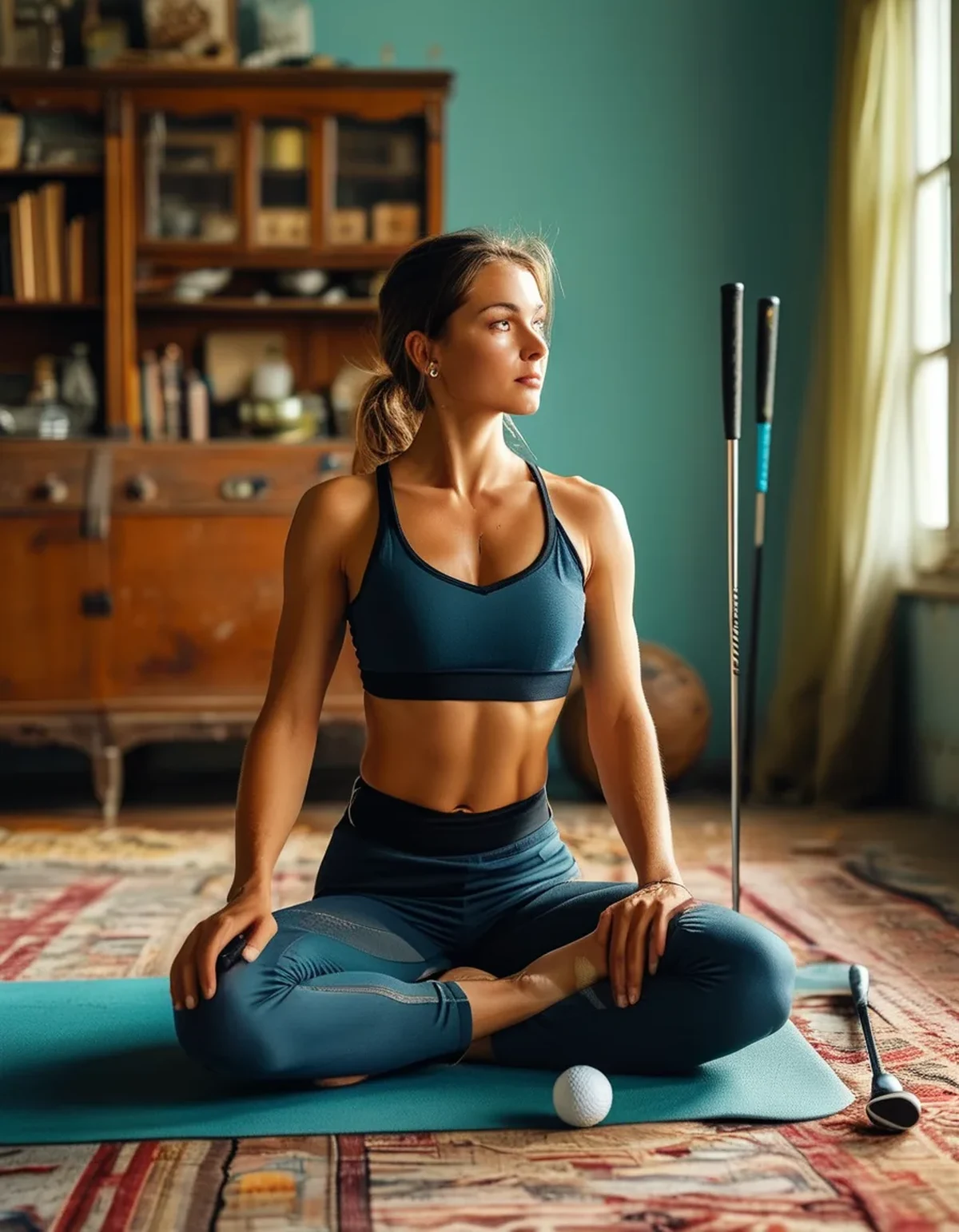
Open-book stretches (lying on your side and rotating the top arm and torso open), seated torso rotations with a club across the shoulders, and foam roller thoracic extensions are commonly recommended — done consistently 3-4 times a week, these target the specific joint segments involved in backswing rotation more directly than general stretching.
Myth vs Fact: Thoracic Mobility and Golf Swing
Myth: A short backswing is almost always a hip mobility problem. Fact: Thoracic spine rotation is a separate, often overlooked contributor, and for many golfers (especially those with desk jobs) it’s actually the primary restriction.
Myth: Thoracic mobility work only matters for older golfers. Fact: Prolonged sitting posture affects thoracic mobility at any age, making this relevant for younger golfers with desk jobs just as much as older ones.
Myth: More hip-mobility stretching will eventually fix a limited backswing regardless of the actual cause. Fact: If the primary restriction is thoracic, not hip, additional hip work provides limited additional backswing depth — identifying the actual limiting joint matters.
FAQ: Thoracic Mobility and Golf Swing Questions, Answered
How long does it typically take to notice a difference in backswing depth from thoracic mobility work?
Many golfers report noticeable rotation improvement within 3-4 weeks of consistent dedicated thoracic drills, though this varies by starting mobility level and consistency.
Can thoracic mobility restrictions cause any pain, or just a shorter swing?
Some golfers report lower back or shoulder discomfort as compensations develop for the restricted thoracic rotation, since other joints pick up the rotational demand the thoracic spine isn’t providing.
Is this something a golf-specific physical therapist typically assesses?
Yes — a golf-focused physical therapist or fitness professional can assess thoracic rotation specifically and distinguish it from hip-mobility limitations more precisely than self-testing alone.
TL;DR:
- Thoracic spine rotation is a major, often overlooked contributor to backswing depth
- Desk sitting posture commonly stiffens thoracic mobility over time, independent of hip flexibility
- A seated rotation self-test can help identify whether thoracic mobility is your specific limiting factor
- Dedicated thoracic drills 3-4 times a week often unlock more backswing depth than hip work alone
A shorter backswing isn’t always a hip story — for a lot of golfers, especially desk-job ones, the upper back is where the real restriction lives.
See It in Motion
Seen here: UPF 50+ Pleated Running Skort with 26” Leggings & Pockets — shop similar styles on bubblelime.com
Keep Reading
This article is for general informational and styling purposes only. Fit, sizing, and product availability may vary.