Golf Swing Power Actually Comes From the Ground — Not Your Arms
Quick Answer: Real swing power comes from pushing into the ground and rotating the hips, not from arm or shoulder speed. Swinging ‘harder’ with your arms alone typically adds tension, not distance.
You’ve tried swinging harder and the ball barely goes farther — sometimes it goes shorter. That’s not bad luck. Arm speed was never the main power source; ground force and hip rotation were doing most of the real work all along.

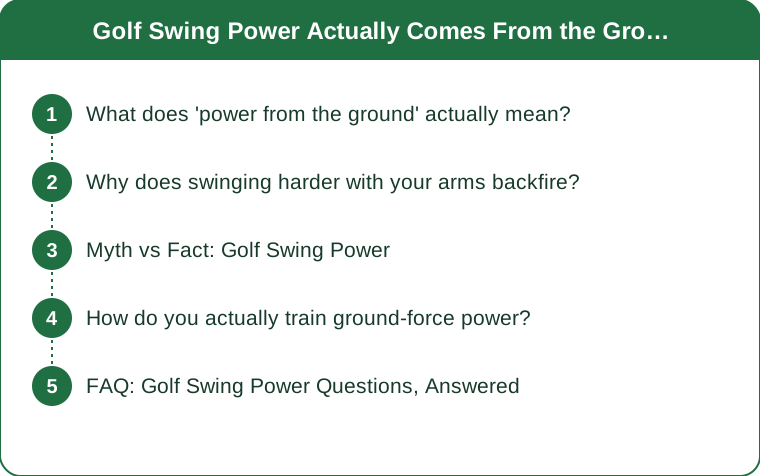
What does ‘power from the ground’ actually mean?
As you transition from backswing to downswing, elite swings show a measurable push into the ground through the lead leg, which the body converts into rotational force up through the hips, torso, and eventually the club.
This ground reaction force, not arm muscle, is where a large share of clubhead speed originates — it’s the same principle that lets a shorter, lighter golfer out-drive a bigger, stronger one with poor sequencing.
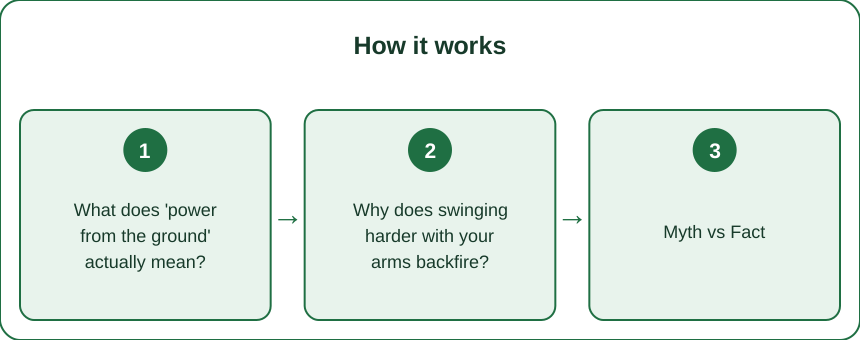
Why does swinging harder with your arms backfire?
Arm-dominant swings tend to rush the downswing and disconnect the sequence — arms firing before the hips have rotated means you lose the compounding effect of ground force plus rotation plus arm speed stacking together.
The result is often a swing that feels more effortful but produces less actual clubhead speed, plus a higher risk of mis-hits since timing becomes harder to repeat under extra tension.

Myth vs Fact: Golf Swing Power
Myth: Bigger arm muscles mean a longer drive. Fact: Sequencing — ground force into hip rotation into torso into arms — predicts clubhead speed far better than raw arm strength alone.
Myth: A faster backswing generates more power. Fact: Backswing speed barely correlates with distance; the downswing transition and ground push is where power is actually generated.
Myth: Power is mostly a young person’s game. Fact: Efficient sequencing can preserve swing speed well past the age when raw muscle mass declines — many senior tour players out-drive far younger, stronger amateurs on technique alone.
How do you actually train ground-force power?
Drills that build the feel of pushing into the ground:
- Step-through drills: step toward the target during the downswing to feel weight transfer into the lead leg
- Jump-and-land practice swings: a small jump at transition exaggerates the ground-push sensation
- Resistance band hip rotation drills: build the hip speed that ground force feeds into
10 minutes of these, 2-3x a week, builds the sequencing pattern faster than range time alone.
FAQ: Golf Swing Power Questions, Answered
Do I need to be strong to generate ground force?
Some lower-body strength helps, but timing and sequencing matter more than raw strength — a well-sequenced average-strength swing often out-performs a poorly-sequenced strong one.
Will focusing on the ground make my swing feel slower?
Initially, yes — it often feels less effortful even as ball speed increases, since power is coming from an efficient chain rather than muscled arm effort.
How long does it take to feel the difference?
Most golfers notice a shift within a few range sessions once they stop consciously ‘swinging hard’ with their arms and let the ground-hip sequence lead instead.
TL;DR:
- Ground force through the lead leg, not arm speed, is the main source of swing power
- Arm-dominant swings often disconnect the sequence and lose net clubhead speed
- Downswing transition matters more than backswing speed for generating power
- Step-through and jump drills build the ground-push feel faster than range time alone
Stop swinging harder with your arms — start pushing into the ground and let rotation do the rest.
See It in Motion
Seen here: UPF 50+ Adjustable A-Line Running Skort with Pockets — shop it on bubblelime.com
Keep Reading
This article is for general informational and styling purposes only. Fit, sizing, and product availability may vary.