Why Your Golf Swing Falls Apart on the Back Nine (And How to Fix It)
Quick Answer: Late-round swing breakdown most often traces back to core and hip rotational endurance fatiguing before the round ends, causing subtle compensations (an earlier release, reduced hip turn) that quietly change swing mechanics without the golfer consciously changing anything — targeted rotational endurance training, not just general fitness, is the most direct way to extend consistent swing quality deeper into a round.
It’s rarely a mental or technical breakdown alone — the muscles responsible for consistent swing mechanics are simply fatiguing faster than most golfers’ current training prepares them for.
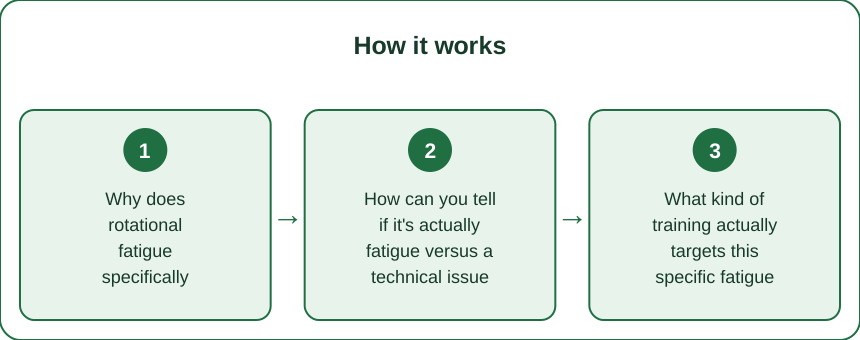
Why does rotational fatigue specifically cause swing breakdown rather than general tiredness?
The golf swing relies heavily on core and hip rotational muscles to generate and control power through a very specific, repeatable sequence, and as those specific muscle groups fatigue over 14-18 holes, the body tends to compensate by altering the sequence — often with an earlier release of the wrists or reduced hip rotation — changes that happen below conscious awareness but measurably affect ball striking and consistency.
How can you tell if it’s actually fatigue versus a technical issue that shows up regardless of when in the round it happens?
A useful self-check is noticing whether swing issues are relatively consistent throughout a round (suggesting a technical issue) or specifically worsen in the back nine or later holes (suggesting fatigue-driven compensation) — tracking which holes specific mishits tend to cluster around over several rounds reveals this pattern more reliably than judging from a single round.

What kind of training actually targets this specific fatigue pattern?
Rotational endurance work — exercises like cable or band rotations performed for higher repetitions or longer time-under-tension, rather than pure maximum-strength rotational training — more directly targets the specific endurance quality needed to maintain swing mechanics deep into a round, as opposed to general fitness or even general strength training alone.
Does course strategy play a role in managing this fatigue pattern too?
Yes — being honest about likely fatigue-driven mechanical changes late in a round and adjusting strategy accordingly (favoring more conservative club selection or shot shape on the back nine rather than assuming identical swing reliability to the front nine) is a practical complement to physical training, especially while building up rotational endurance capacity.
FAQ: Golf Swing Fatigue Questions, Answered
How many holes in does this fatigue pattern typically start showing up?
It varies significantly by individual fitness level, but many recreational golfers report noticeable changes starting somewhere in holes 12-15, which is part of why the term ‘back nine’ fatigue is such a common, widely recognized pattern.
Is walking versus riding a cart relevant to how much this fatigue shows up?
Yes — walking adds a general fatigue layer on top of the swing-specific rotational fatigue, meaning walkers may notice the pattern earlier in a round than cart riders, though rotational endurance training helps both groups.
How long does it typically take to see improvement from targeted rotational endurance training?
Most golfers report noticing more consistent late-round swing quality within 6-8 weeks of consistent rotational endurance training, though this varies with training frequency and starting fitness level.
TL;DR:
- Core and hip rotational fatigue, not general tiredness, is the usual cause of back-nine swing breakdown
- Tracking which holes mishits cluster around across several rounds reveals whether it’s fatigue-driven
- Rotational endurance training (higher reps, longer time-under-tension) targets this specific weakness
- Adjusting course strategy for likely late-round changes complements ongoing physical training
A swing that falls apart late in the round is usually a specific, trainable endurance gap — not an inevitable part of playing 18 holes.
See It in Motion
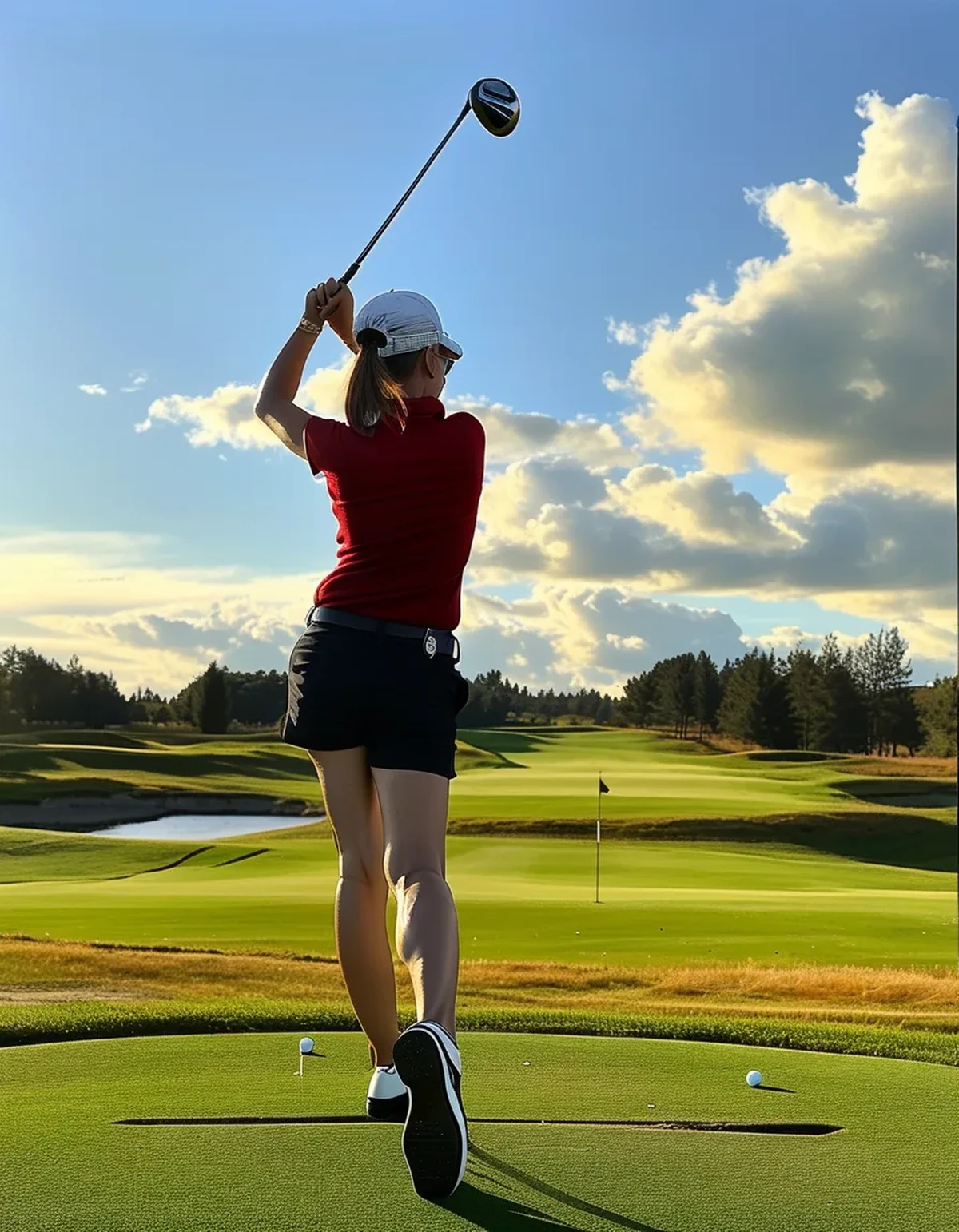
Seen here: UPF 50+ Pleated Running Skort with 26” Leggings & Pockets — shop similar styles on bubblelime.com
Keep Reading
This article is for general informational and styling purposes only. Fit, sizing, and product availability may vary.