Golf in Cool Mornings: Why Your First Three Holes Fall Apart
Quick Answer: Muscle temperature drives power output, and a 1C drop in muscle temperature costs roughly 2 to 5 percent of power and speed. A 12C morning versus a 22C one means you start with meaningfully less clubhead speed and noticeably less rotational range - which is why the first three holes go wrong before you have found any rhythm. Ten minutes of active warm-up, not static stretching, recovers most of it.
The ball is also genuinely travelling shorter in cold air, and that is a club selection problem rather than a swing problem.

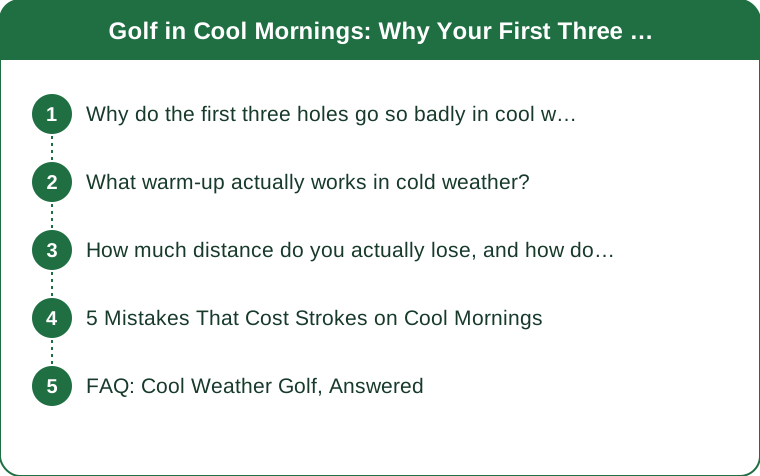
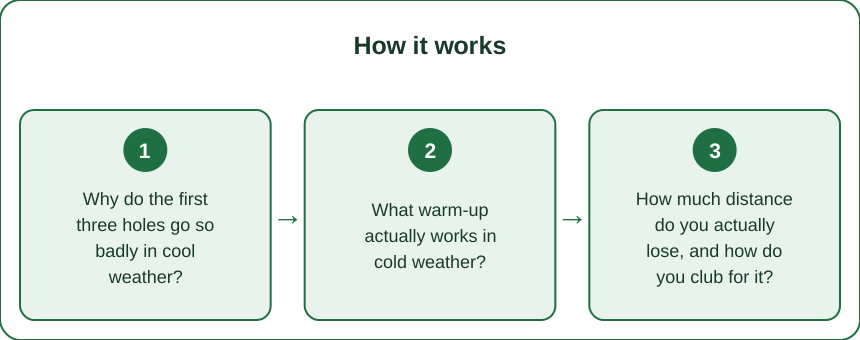
Why do the first three holes go so badly in cool weather?
Because you are physically a different athlete at 12C than at 22C, and no amount of intention fixes that.
The temperature and performance relationship. Muscle power output falls roughly 2 to 5 percent for each 1C drop in muscle temperature. Muscle temperature lags air temperature but tracks it, particularly in the extremities and in tissue that has not been working.
What that means practically:
- Reduced clubhead speed, straightforwardly. Cooler muscle contracts more slowly
- Reduced range of motion, especially in thoracic rotation, which is the source of most of the golf swing
- Slower reaction and coordination, which degrades tempo and sequencing
- Reduced tissue elasticity, so the stretch-shortening cycle that powers the swing works less well
Why the thoracic spine is the specific problem. Thoracic rotation is the largest single contributor to swing range, and it is the area that stiffens most in cold. Losing 10 to 15 degrees of thoracic rotation shortens the backswing measurably and, more damagingly, changes the sequence - the arms take over when the torso will not turn.
The compensation cascade that produces bad shots:
- Restricted rotation leads to an arms-dominated backswing
- Which produces an over-the-top downswing and the resulting slice or pull
- Which prompts a conscious correction, usually the wrong one
- By the fourth hole you are warm and now playing with a compensation you added on the first tee
That last point is the real cost. The first three holes do not just score badly - they install a swing fault that you then spend the rest of the round fighting. The warm-up is not about the first three holes. It is about the other fifteen.
What warm-up actually works in cold weather?
Active movement that raises tissue temperature, and specifically not static stretching.
Why static stretching is the wrong tool here. Static stretching held for 30 seconds or more temporarily reduces power output - the effect is well documented and lasts up to an hour. In cold weather that is the exact opposite of what you need. Save it for after the round.
The 10-minute protocol:
- Minutes 1 to 3: general warming. Brisk walking, arm swings, marching. Get the heart rate up and blood into the extremities. Nothing golf-specific yet
- Minutes 3 to 6: dynamic mobility. Standing thoracic rotations, hip circles, leg swings front and side, shoulder circles. Movement through range, never held
- Minutes 6 to 9: golf-specific movement. Slow half swings with a wedge, building gradually. Two clubs together for weighted swings if you have space
- Minutes 9 to 10: build to speed. Progressive full swings from 50 to 90 percent. Do not go to full speed cold on the first tee
The thoracic mobility drills that matter most:
- Standing rotations with a club across the shoulders, 10 to 15 each way, moving through full range at moderate speed
- Open books lying on your side if you have somewhere to do them, which are the best single thoracic drill available
- Cross-body arm swings, which warm the shoulders and upper back together
Staying warm once you have warmed up, which is half the battle:
- Layers you can remove, since you will heat up walking and cool down waiting
- Keep hands warm. Hand temperature strongly affects grip pressure and feel, and cold hands grip harder without you noticing. Mittens between shots make a genuine difference
- Do not sit still on a cold cart. Muscle temperature falls quickly when static in cold air, and a slow round with long waits undoes the warm-up entirely
- Repeat a shortened warm-up after any long delay - 60 seconds of arm swings and rotations at the tee is enough
On grip pressure specifically. Cold hands unconsciously increase grip pressure, which restricts wrist hinge and reduces clubhead speed further. This compounds with the muscle temperature effect and it is entirely fixable by keeping your hands warm.

How much distance do you actually lose, and how do you club for it?
More than most people account for, and from two separate causes.
Cause one: the air. Colder air is denser, which increases drag on the ball. The rule of thumb from launch monitor data: roughly 1 to 2 yards of carry lost per 10 degrees Fahrenheit below standard conditions, or around 2 to 4 yards per 5C.
Cause two: the ball. Golf balls lose compression and rebound efficiency when cold. A ball at 5C is measurably less lively than one at 20C - worth another 3 to 5 yards on a full shot.
Cause three: you. The muscle temperature effect above, which is the largest of the three early in the round.
Adding up on a cool autumn morning at 10C versus a summer 25C:
- Air density: roughly 5 to 7 yards
- Ball temperature: roughly 3 to 5 yards
- Reduced swing speed early in the round: 5 to 15 yards, and this one shrinks as you warm up
- Total on the first few holes: often 15 to 25 yards on a full iron, which is a full club and sometimes two
What to do about it:
- Take one extra club for the first three holes, then reassess. Most cold-morning approach shots finish short, and it is almost always under-clubbing rather than a bad swing
- Keep a spare ball in an inside pocket and rotate it every few holes. A warm ball is worth several yards and this is entirely legal, provided you are not using a device to heat it
- Expect less roll. Soft, damp autumn fairways add nothing after landing, so your total distance drops more than your carry does
- Recalibrate your wedges specifically, since these are the distances where being a club out matters most
The green reading change nobody prepares for. Autumn greens are slower - more moisture, slightly longer grass, dew in the mornings. Morning dew alone can cost significant pace on a putt. Most three-putts on cool mornings are pace errors, and they come from summer-calibrated feel.
5 Mistakes That Cost Strokes on Cool Mornings
1. Static stretching on the first tee. It feels like preparation and it temporarily reduces power output for up to an hour. Do dynamic movement instead and save the static work for after the round.
2. Swinging at full speed on the first tee having done nothing. This is both the worst-performing swing of your day and the highest injury risk moment of your week. A progressive build from 50 to 90 percent takes ninety seconds and changes the whole opening.
3. Not adjusting club selection and then adjusting the swing instead. You come up short, conclude you swung badly, and swing harder on the next one. The ball was always going to be a club short - taking more club prevents an entire chain of compensations.
4. Cold hands. Grip pressure rises without you noticing, restricting wrist hinge and further reducing speed. Mittens between shots are the highest return-per-effort item in cold golf and nobody wants to look like they need them.
5. Letting a slow round undo the warm-up. Muscle temperature falls fast when standing still in cold air. Sixty seconds of arm swings and torso rotations on the tee after any wait keeps what you built.
Every one of these is a preparation error rather than a technique error, which is good news - they cost nothing to fix.
FAQ: Cool Weather Golf, Answered
How much distance do I lose in cold weather?
Roughly 2 to 4 yards per 5C from air density, another 3 to 5 from a cold ball, and 5 to 15 more from reduced swing speed before you are warm. On a 10C morning that is frequently a full club, sometimes two on the opening holes.
Should I stretch before playing in the cold?
Not statically. Static stretches held 30 seconds or more temporarily reduce power output for up to an hour. Use dynamic movement - rotations, swings, leg swings - and save static stretching for afterwards.
How long should a cold-weather warm-up be?
About ten minutes: three of general warming, three of dynamic mobility, three of golf-specific movement, and one building to near-full speed. Repeat a 60-second version after any long wait.
Does keeping a ball warm actually help?
Yes. Golf balls lose compression and rebound efficiency when cold - worth several yards. Keep a spare in an inside pocket and rotate every few holes. Using a device to warm balls is not permitted, but a pocket is fine.
Why do I slice more in cold weather?
Usually restricted thoracic rotation. When the torso will not turn, the arms take over, which produces an over-the-top downswing. It is a mobility problem presenting as a swing fault, and warming up properly fixes most of it.
Why am I three-putting more in autumn?
Pace, almost certainly. Autumn greens are slower from moisture, dew, and longer grass, and your feel is still calibrated to summer speeds. Spend five minutes on the practice green on long putts rather than short ones.
TL;DR:
- Muscle power falls roughly 2 to 5 percent per 1C of muscle temperature - you are physically different at 12C
- Restricted thoracic rotation makes the arms take over, which is where the cold-morning slice comes from
- Warm up with 10 minutes of dynamic movement; static stretching temporarily reduces power
- Expect to lose a full club on the opening holes and take one extra rather than swinging harder
- Keep hands and a spare ball warm, and redo a 60-second warm-up after long waits
The first three holes are not a scoring problem. They are where you install the swing fault you fight for the rest of the round - and ten minutes beforehand stops that from happening.
See It in Motion
Seen here: UPF 50+ Adjustable A-Line Running Skort with Pockets — shop it on bubblelime.com
Keep Reading
This article is for general informational and styling purposes only. Fit, sizing, and product availability may vary.