Golf in Humid Air: What Actually Changes With Your Distance
Quick Answer: Humid air is very slightly less dense than dry air at the same temperature, which means the ball travels marginally further, not less - the effect is small, on the order of a metre or two. What actually costs you distance in humid conditions is physiological: dehydration, reduced grip security, slower recovery between shots, and the fatigue that shortens your backswing over 18 holes. Heat itself increases distance too. If you are shorter in August, look at your body and your grip, not the air.
Everyone says the air is heavy today.
The air is actually lighter. You are the one that got heavier.
This is general information, not medical advice.

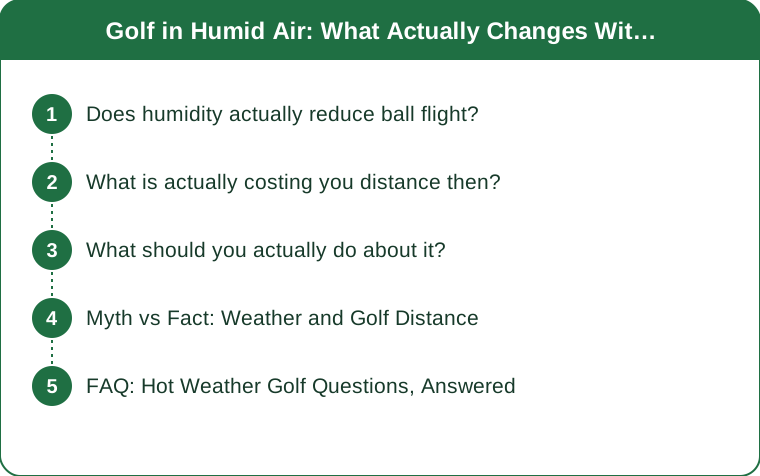
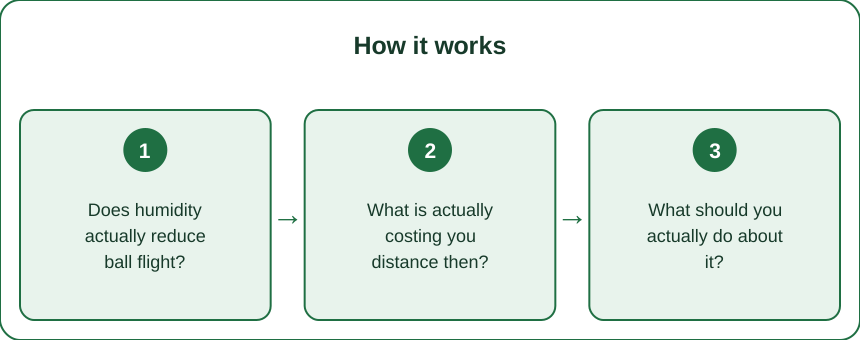
Does humidity actually reduce ball flight?
No - it very slightly increases it, and the effect is too small to notice.
The intuition is that humid air feels thicker, so it must be denser. The physics runs the other way. A water molecule weighs less than the nitrogen and oxygen molecules it displaces in the air. When water vapour content rises, average molecular mass falls, and the air becomes marginally less dense.
Less dense air means less drag, which means slightly more carry. The magnitude is genuinely trivial - going from very dry to very humid at the same temperature is worth around a metre on a full driver, well inside normal shot-to-shot variation.
Temperature is the far bigger air-related variable, and it also points toward more distance:
- Warm air is meaningfully less dense than cold air
- A warm ball is more elastic and compresses better at impact
- The combined effect between a cold morning and a hot afternoon can be several metres per club
So on a hot humid day, the conditions are working slightly in your favour for distance. Which makes the near-universal experience of hitting it shorter in August genuinely interesting, because something else is clearly happening.
What humidity does affect legitimately:
- Spin and control, since moisture on the clubface and ball reduces friction at impact
- Course conditions, because soft wet fairways kill roll entirely - and this is the big one
- Green speed, which slows noticeably in damp conditions
That last group is where a genuine loss of total distance lives. Carry may be unchanged or slightly up, and total distance drops because the ball plugs instead of running 20 metres. People experience that as hitting it shorter, and they are right about the outcome and wrong about the cause.
What is actually costing you distance then?
Your body, in four fairly predictable ways.
Dehydration first, because it is the largest and most fixable. A fluid loss of 2% of body weight - about 1.4kg for a 70kg golfer, entirely achievable over 18 holes in heat - measurably reduces strength, power output and coordination. Golf is a power-and-precision sport, so it loses on both counts.
Grip security second. Sweaty hands mean either a slipping grip or, more commonly, a compensating death grip. Excessive grip pressure restricts wrist hinge and forearm rotation, which reduces clubhead speed directly. This is one of the most common August distance losses and it is entirely mechanical.
Fatigue third. Heat increases cardiovascular strain considerably - the body diverts blood to the skin for cooling, which competes with the blood supply to working muscle. The result is that holes 13 through 18 feel harder than they should, and a tired golfer shortens the backswing without noticing.
Warm-up quality fourth, and this one is counterintuitive. People warm up less in hot weather because they already feel warm. Feeling warm is not the same as having warm, mobile joints and activated muscles, and a skipped mobility routine costs rotational range which costs distance.
The compounding effect matters most:
- Holes 1 to 6: normal distance, feeling fine
- Holes 7 to 12: grip pressure rising, slight fatigue, distance beginning to slip
- Holes 13 to 18: meaningful dehydration, shortened backswing, several metres lost per club
Which produces the specific complaint most golfers actually have in summer: not that they hit it shorter, but that they fall apart on the back nine. That is a physiological problem with a physiological solution.

What should you actually do about it?
Hydrate on a schedule, fix the grip, and manage the round rather than the swing.
Hydration needs to start before the round. Arriving already slightly dehydrated is common and it is difficult to catch up while playing. 500ml in the hour before teeing off, then 150 to 250ml every two or three holes, drinking to a schedule rather than to thirst.
Add electrolytes for anything over about 90 minutes in real heat. Sodium loss through sweat is substantial, and water alone can dilute what remains - which is why plain water sometimes fails to make you feel better despite drinking plenty.
Grip is the highest-value mechanical fix:
- Two towels, one kept dry - the standard tour approach, and it works
- Rain or all-weather gloves, which counterintuitively grip better when damp
- A spare glove, swapped at the turn
- Wipe the grip, not just your hands, since the grip itself gets slick
- Consciously check grip pressure at address, particularly after hole 10
Manage the round physically:
- Shade whenever available, particularly while waiting
- A hat and light coloured clothing, which genuinely reduces heat load
- Eat something around the turn, since blood sugar affects concentration and coordination
- Slow down between shots rather than rushing in heat
On club selection: play the conditions you can see. If fairways are soft and wet, expect no roll and take the extra club for total distance, not carry. If the course is baked and firm in dry heat, the ball will run further than you expect. The air is not the variable - the ground is.
And know the warning signs. Dizziness, nausea, a headache, or stopping sweating in heat are reasons to come off the course, not to push on. Heat illness escalates quickly and golf is not worth it.
Myth vs Fact: Weather and Golf Distance
Myth: Humid air is heavy and kills distance. Fact: Water vapour is lighter than the air it displaces, so humid air is slightly less dense and the ball flies a fraction further. The effect is around a metre - real, and far too small to notice.
Myth: You hit it shorter in summer. Fact: Warm air is less dense and a warm ball compresses better, so the conditions favour distance. What drops is total distance on soft wet ground, and swing quality as you fatigue.
Myth: You need less warm-up when it is hot. Fact: Feeling warm is not the same as having mobile joints. Skipped warm-ups in summer are a common cause of lost rotational range, and less rotation is less distance from the very first tee.
Myth: Drinking when you feel thirsty is enough. Fact: Thirst lags behind actual fluid deficit, and by the time you notice it you are already down enough to affect power output. Drinking on a schedule is the practical answer over 18 holes.
Myth: A tighter grip gives you more control in sweaty conditions. Fact: Excessive grip pressure restricts wrist hinge and forearm rotation, reducing clubhead speed. A dry towel and a rain glove let you hold on with normal pressure, which is worth more than any amount of squeezing.
Myth: Altitude and humidity work the same way. Fact: Altitude is a genuinely large effect - thinner air at elevation can add substantial distance. Humidity is a rounding error by comparison. If someone tells you the air is heavy today, they are describing how it feels, not how it behaves.
FAQ: Hot Weather Golf Questions, Answered
Does the ball really fly further in humid air?
Marginally, yes. Water vapour is lighter than the nitrogen and oxygen it displaces, so humid air is slightly less dense and produces slightly less drag. The difference is around a metre on a driver, which is inside normal variation.
Why do I lose distance on the back nine in summer?
Mostly dehydration and fatigue. A 2% loss of body weight in fluid measurably reduces power and coordination, and heat increases cardiovascular strain so the backswing shortens without you noticing. It builds through the round, which is why the back nine suffers.
How much should I drink during a round?
Around 500ml in the hour before teeing off, then 150 to 250ml every two or three holes. Drink to a schedule rather than to thirst, and add electrolytes for rounds over 90 minutes in genuine heat.
Do rain gloves help in sweaty conditions?
Yes, and they are one of the most useful items in a summer bag. All-weather and rain gloves grip better when damp, which lets you hold the club at normal pressure instead of squeezing - and grip pressure is a direct cost to clubhead speed.
Should I take more club in humid conditions?
Base it on the ground, not the air. Soft wet fairways kill roll, so total distance drops even when carry does not - take the extra club for that reason. On firm baked ground in dry heat, expect more run than usual.
When should I stop playing in heat?
Dizziness, nausea, headache, confusion, or stopping sweating while still hot are all reasons to come off the course and cool down. Heat illness escalates quickly, and seeking medical help is the right response rather than finishing the round.
TL;DR:
- Humid air is slightly less dense than dry air, so the ball flies marginally further - not shorter
- Warm air and a warm ball both add distance too; the conditions favour you
- Total distance drops on soft wet fairways because roll disappears, not because carry does
- The real losses are dehydration, grip pressure, fatigue and skipped warm-ups
- Drink 500ml before, then 150 to 250ml every two or three holes, with electrolytes in real heat
- Two towels and a rain glove fix the grip problem, which fixes clubhead speed
- Come off the course for dizziness, nausea or stopping sweating
The air is lighter. You are the variable that changed.
See It in Motion
Seen here: UPF 50+ Adjustable A-Line Running Skort with Pockets — shop it on bubblelime.com
Keep Reading
This article is for general informational and styling purposes only. Fit, sizing, and product availability may vary.