Why Grip Strength Might Be the Missing Piece in Your Golf Swing
Quick Answer: A stronger grip lets you hold the club more lightly through the swing, which paradoxically increases clubhead speed by reducing tension in the forearms and wrists. Two sessions a week of grip-specific training (farmer’s carries, dead hangs, wrist curls) is enough to see swing benefits within 6-8 weeks.
You’ve drilled hip rotation and tempo but your swing still feels tense through impact. Grip strength is the piece most golf-fitness advice skips, and a weak grip forces you to over-grip the club, which adds tension exactly where your swing needs to stay loose.

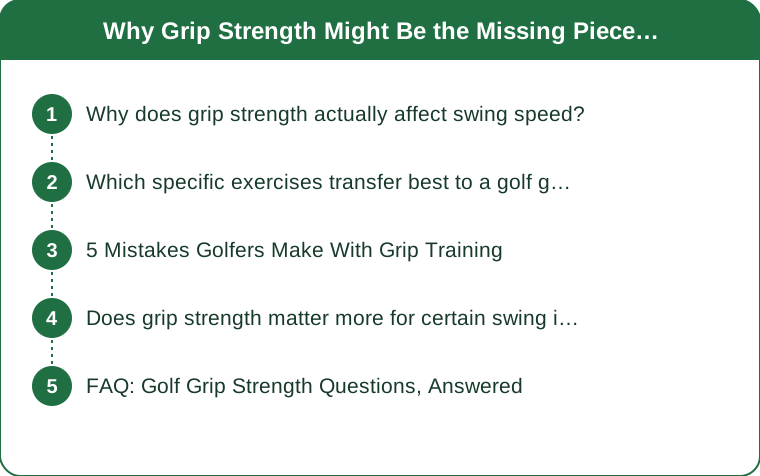
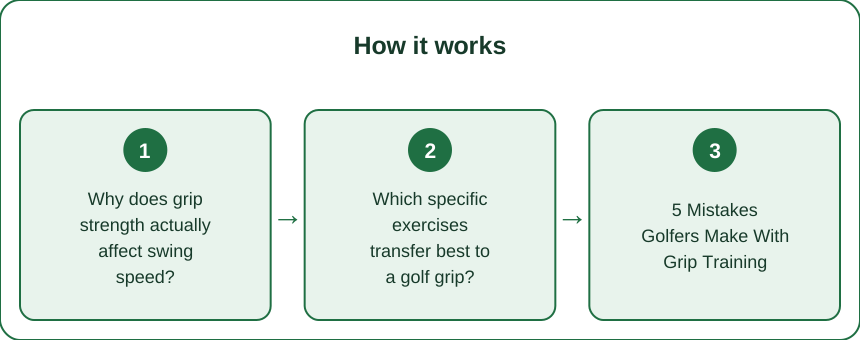
Why does grip strength actually affect swing speed?
A weak grip forces compensatory over-gripping — squeezing the club tighter than necessary to feel secure through the swing. That excess tension travels up through the forearms and shoulders, restricting the fluid wrist hinge and release that generates clubhead speed.
A genuinely strong grip lets you hold the club with less overall tension (often called a “light grip pressure”), since your hand strength provides security without needing maximum squeeze — and less tension through the swing generally means more speed at impact.
Which specific exercises transfer best to a golf grip?
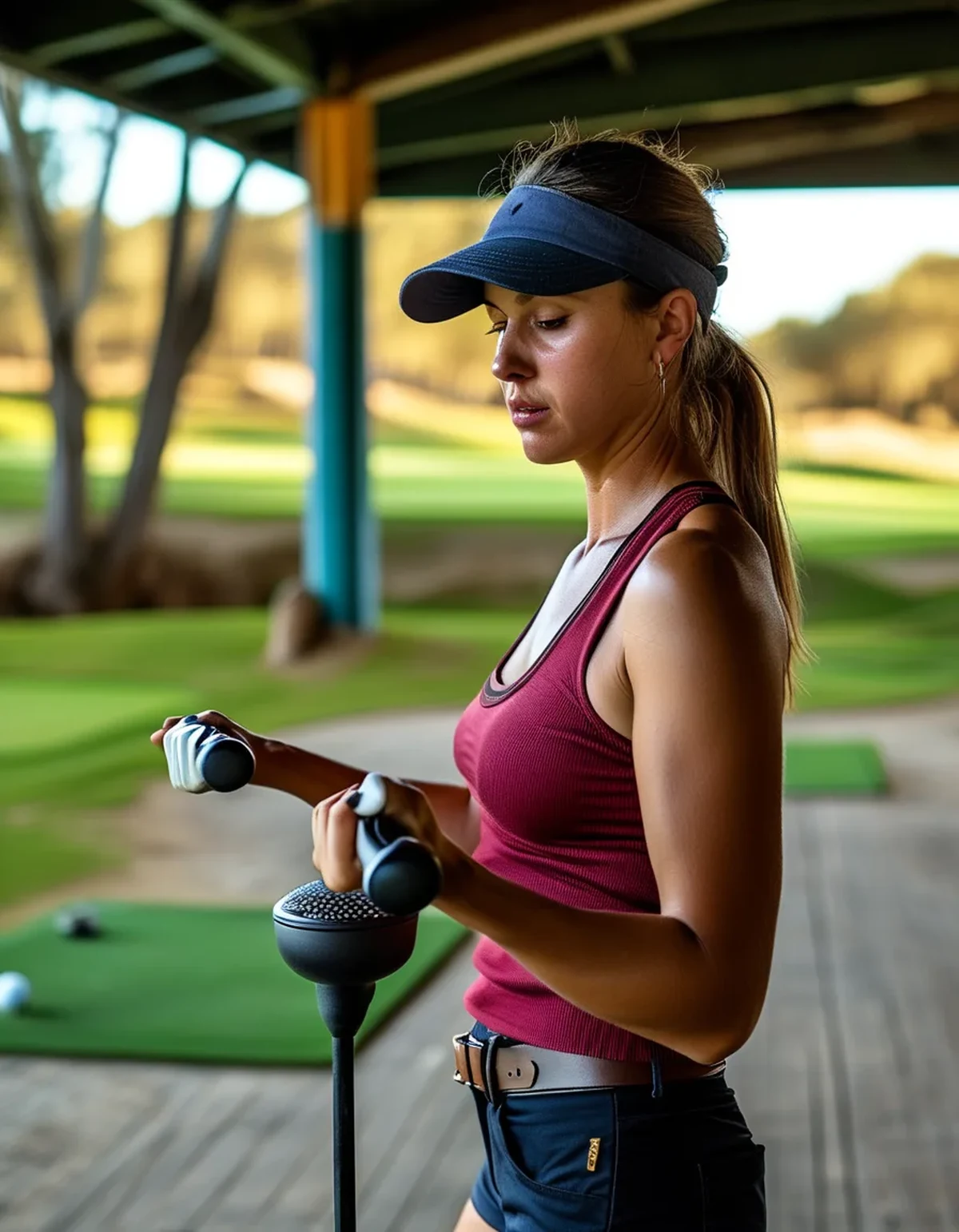
Farmer’s carries — build the functional, sustained grip endurance golf actually uses over 18 holes, not just a one-rep max squeeze. Dead hangs from a pull-up bar — build raw grip strength and forearm endurance simultaneously. Wrist curls and reverse wrist curls — target the specific forearm muscles controlling club release through impact.
Two sessions a week, 3-4 sets of each, complements existing golf fitness work without adding significant training volume.
5 Mistakes Golfers Make With Grip Training
1. Only training grip strength, ignoring wrist mobility. Strength without mobility can actually stiffen the release — both need attention together.
2. Training grip to failure right before playing. Fatigued grip strength on the course defeats the purpose — schedule grip work on non-playing days.
3. Using only static grip tools (hand grippers). These build isolated squeeze strength but miss the sustained, dynamic grip endurance golf actually requires.
4. Ignoring forearm asymmetry. A dominant-hand imbalance can subtly affect club face control — unilateral exercises help address this.
5. Expecting overnight results. Grip strength adaptations, like most strength gains, take 6-8 weeks of consistent training to show up in swing feel.
Does grip strength matter more for certain swing issues?
Golfers with a tendency to slice often over-grip out of subconscious control-seeking, which restricts the release and opens the clubface — grip strength training paired with a genuinely lighter hold can help address this specific pattern.
Golfers dealing with inconsistent contact may also benefit, since grip fatigue late in a round often correlates with control breaking down on the back nine specifically.
FAQ: Golf Grip Strength Questions, Answered
How often should golfers train grip strength?
Two sessions a week is enough for most recreational golfers to see swing benefits without adding excessive training load.
Can grip strength training help with golfer’s elbow?
It can help build resilience in the forearm tendons over time, but active golfer’s elbow pain should be addressed with a physical therapist first before adding load. This is general information, not medical advice.
Is a golf-specific grip trainer worth buying over generic grip tools?
Not essential — farmer’s carries, dead hangs, and wrist curls with standard gym equipment cover the same strength and endurance qualities a specialty tool targets.
TL;DR:
- Weak grip strength causes compensatory over-gripping, which adds swing-limiting tension
- Farmer’s carries, dead hangs, and wrist curls transfer best to golf-specific grip demands
- Train grip on non-playing days, not right before a round
- Expect swing-feel changes within 6-8 weeks of consistent twice-weekly training
See It in Motion
Seen here: UPF 50+ Adjustable A-Line Running Skort with Pockets — shop it on bubblelime.com
Keep Reading
This article is for general informational and styling purposes only. Fit, sizing, and product availability may vary.