Golf Fitness: Exercises to Improve Your Swing (and Prevent Injury)
Quick Answer: A better golf swing comes from training five things: core and rotational strength, hip mobility, shoulder and thoracic mobility, balance and stability, and general full-body strength. You don’t need to become a gym rat — a couple of focused sessions a week, plus a proper dynamic warm-up before you play, delivers more power, better consistency, and fewer injuries.
Golf might look gentle, but a powerful, consistent swing demands real strength, mobility, and stability — and the right fitness work can genuinely lower your scores while protecting your body from the wear and tear golf can cause. You don’t need to become a gym rat; you need to train the right things. Here’s how to build a better swing.

Why Does Fitness Actually Improve Your Golf Game?
A golf swing is a powerful rotational movement that relies on core strength, hip and shoulder mobility, and stability. Training these areas gives you more power, better consistency, and fewer injuries — the same way training benefits any other rotational athletic movement. Golf is genuinely athletic, whether or not it looks that way from the fairway, and treating your body like an athlete’s pays off directly on the scorecard. Fitness is your secret club.

What Are the Actual Key Focus Areas for Golf Fitness?
Five areas do most of the work:
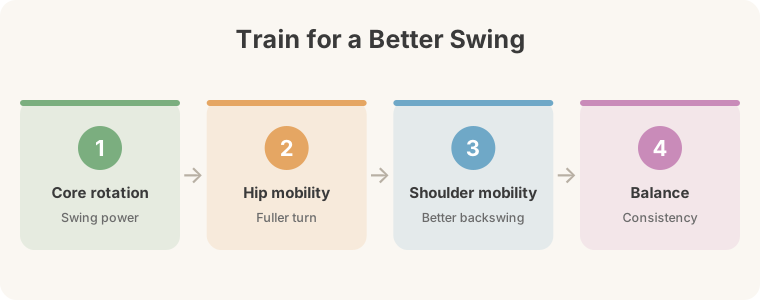
- Core and rotational strength. Your core generates and transfers swing power. Rotational exercises — cable or band rotations, wood chops — build the twisting strength a good swing genuinely needs.
- Hip mobility. Golf demands a big hip rotation. Hip mobility work (rotations, stretches, lunges) unlocks a fuller, more powerful turn than a stiff hip ever could.
- Shoulder and thoracic mobility. A good backswing needs mobile shoulders and a mobile upper back. Thoracic rotation drills improve your turn and reduce strain on the joints doing the work.
- Balance and stability. A stable base means a consistent swing. Single-leg and core stability work keeps you grounded and controlled through impact.
- General strength. Overall strength across your legs, back, and core supports both power and endurance over a full round, especially on the back nine when fatigue starts affecting form.
What’s a Smart, Realistic Approach to Training for Golf?
- Warm up before you play with dynamic stretches, not cold swings — a cold muscle asked to rotate powerfully is exactly how golf injuries happen.
- Train rotation and mobility as the golf-specific priorities, since these are the areas most directly tied to swing quality.
- Build general strength with a couple of sessions a week — you don’t need daily gym time to see real improvement.
- Don’t neglect flexibility. Mobility both protects your body and empowers a fuller swing at the same time.
- Progress gradually. Consistency over intensity is what actually compounds into a better swing over months, not a single aggressive training block.

What Nobody Tells You About Golf Fitness
- Golf injuries often come from the warm-up you skipped, not the round itself. A cold rotational movement under load is a common injury mechanism that a few minutes of dynamic stretching largely prevents.
- Hip mobility has an outsized effect on swing power relative to how little attention it gets. Many amateur golfers chase more strength training before addressing a genuinely limiting hip mobility deficit.
- You don’t need to train like a tour pro to see real results. A couple of focused sessions a week targeting the five areas above outperforms sporadic, unfocused gym time.
- Thoracic mobility is one of the most overlooked pieces of a powerful backswing. A stiff upper back quietly caps your turn no matter how strong your core is.
Golf Fitness FAQ
How many days a week should I train for golf fitness?
Two focused sessions a week targeting rotational strength, mobility, and stability is enough for most recreational golfers to see real improvement, especially when paired with a proper warm-up before every round.
What’s the single most important area to train if I only have time for one?
Hip mobility. It has an outsized effect on how full and powerful your turn can be, and it’s frequently the limiting factor amateur golfers overlook in favor of general strength work.
Do I need to warm up differently for golf than for other sports?
The principle is the same — dynamic stretching rather than static stretching or cold swings — but golf-specific warm-ups should emphasize hip and thoracic rotation specifically, since those are the movements your swing relies on most.
Bottom Line
Improve your golf swing with fitness that targets core and rotational strength, hip and shoulder mobility, balance, and general strength — the athletic foundations of a powerful, consistent swing. Train these, warm up properly, and you’ll add power and protect your body. Treat golf like the athletic game it is, and your scorecard will notice. This article is for general wellness purposes only and isn’t medical advice.
TL;DR:
- Core and rotational strength generates and transfers your swing’s power
- Hip mobility unlocks a fuller, more powerful turn
- Shoulder and thoracic mobility support a better backswing with less strain
- Balance and stability keep your swing consistent, not just powerful
- A proper dynamic warm-up before every round prevents most swing-related injuries
See It in Motion
Seen here: UPF 50+ Pleated Running Skort with 26” Leggings & Pockets — shop similar styles on bubblelime.com
Keep Reading
This article is for general informational and styling purposes only. Fit, sizing, and product availability may vary.